How These Digests Actually Get Made: Notes from the Night Shift
海外の反応まとめができるまで。毎晩数千件のコメントを読んでいる側の手の内
People ask sometimes: do you actually read all of them? I do. Thousands of comments a night, Japanese and English both, and a few dozen survive into the articles you read here. This piece is the whole playbook, every call that gets made between opening a comment section and hitting publish. I'm not worried about giving the trick away. The trick is mostly staying up late.
It Starts with Numbers. The Numbers Also Lie
Which topics become articles gets decided by numbers first. Comment counts on official PVs and clips, like counts, how fast they're climbing. Picking on instinct alone drifts toward my own taste, so the first sieve is always numerical. You can spot a comment section mid-festival from a mile away. When an American couple recreated the Japanese hide-and-seek game Meccha Chameleon in real life, this was sitting at the very top.
“I am actually pretty impressed by your painting skills! Painting teacher in Japan when? Lol jk”
The second I see a number like that, the night's article picks itself. But numbers alone don't get the final say. Some sections rack up likes on inside jokes that won't travel, and some are only climbing because they're on fire. One-off flame wars, reactions piled under a sketchy unofficial upload. Those get cut here no matter what the counts look like. The numbers do the sifting. The reading makes the call.
Thousands In, a Few Dozen Out
A busy video carries thousands of comments. An article here runs 20 to 40 of them. Sorting by likes and taking the top would not make an article, because the top is full of the same thought phrased five ways. So the mix gets built by hand: the reaction that shows the consensus, the minority take with an angle worth reading, the comment handing you context you'd never get from outside. Whether comments chain into a conversation matters too. A comment that answers the one before it often does more work in an article than a stronger comment standing alone.
The part of this stage that eats the most time isn't choosing. It's cutting. Dropping a well-liked comment because it doesn't serve the spine of the article stings a little every time. Some of the ones that didn't make it, I'm still thinking about the next day.
Translation Is a Tug-of-War Between Accuracy and Temperature
Translation here runs nuance-first. Net slang dies in a word-for-word pass, so it gets swapped for whatever carries the same temperature in the target language's fan culture. The catch is that a loose translation smuggles in the translator's read. Which is why the original always gets printed alongside: you should be able to check the work at any moment. That's the price of admission for translating loosely. Here's one from the Jimoto Saiko! Netflix teaser.
“finally the "I wish I was a schoolgirl in Japan, instead of random drug dealer in Brazil" guy can fulfill his dreams 💔”
In the original he's just the guy. But the guy, in this context, carries that particular half-mocking familiarity the internet reserves for its minor legends. The Japanese rendering landed on niki, net slang born from aniki, big brother, which wraps a stranger in exactly that ironic affection. Getting there took about thirty minutes of staring at one word. That tug-of-war happens dozens of times per article, and the original is right there whenever you want to check the call.
The judgment calls that demand the most care are irony and exaggeration. English comments run hotter than Japanese ones, and a literal rendering reads more extreme than the writer meant. Is this a real complaint or affectionate ribbing? The whole thread's mood decides, not the single line. Get that wrong and you've fabricated the temperature of an entire comment section, which is its own kind of lie.
The English side of this site, the one you're reading now, runs the same job in reverse: Japanese comment sections translated outward. The tug-of-war is identical in either direction. This gem from a Yani Neko episode preview had me groaning at the ceiling for a while.
“The one where overseas fans all quit drugs, the movie.”
The original ends in no maki, a chapter-title suffix from old storybooks, deadpan and formal in the funniest way. The landing spot was tacking on the movie, trading storybook cadence for trailer-voice cadence. Same joke, different costume. Nights when a swap like that clicks are the nights this job feels great.
What Gets Added Around the Comments
Excerpts and translations alone can't tell you why a comment section reacted the way it did. So the headline, the intro and the notes carry context written fresh for each article: which stretch of the source material is being adapted, how earlier seasons went over, where the show sits in the other side's fandom. The background you can't get by reading the comments is exactly what an edited piece can add. Only context that can be verified goes in. Guesses don't.
The Lines That Don't Get Crossed
To close, the standing list of things this site will not do. No reprinting comment sections in full: excerpts only, with a link sending you back to the source. No fabricated numbers and no invented comments: every like count is the real figure at the moment it was pulled. No unofficial uploads as sources. No quotes without a source link. No stating guesses as fact on anything that can't be verified. And if a rights holder reaches out, it gets checked and handled promptly. It might look like a lot of rules. It's the opposite. Deciding them once means never having to hesitate at 2am.
That's the whole playbook. Sift by numbers, cut while wincing, agonize over single words. The reason the comment sections still get opened every night is that somewhere out there, a festival is happening that I don't know about yet. Being the first to find it and carry it across is the best part of this job, and it hasn't worn off. If there's a video whose reactions you want to see, the contact form is open. Longer nights are welcome here.
More from Japan
- #めっちゃカメレオン
 6,383 likesGamesYouTube
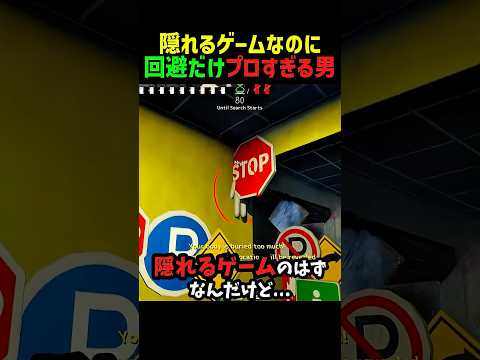
A Meccha Chameleon Player Dodges Instead of Hiding — and Japan Can't Stop Laughing
Meccha Chameleon is the hide-and-seek party game out of Japan that just exploded worldwide: hiders disguise as objects while a seeker hunts them. But in this clip — shared by Japanese creator Sekai Ojisan — the hider does the exact opposite of hiding: he juke-dances around the 'stop man' seeker with pinpoint emote-cancels, and Japanese fans lost it. The most-liked comment simply declares that the entire point of the game has changed. From there the thread crowns a whole new archetype ('there are chameleon players, hide-and-seek players… and now: the dodge faction'), marvels at how the player shrinks his hitbox with emotes ('so crafty'), and notes that Chinese players in particular tend to run circles rather than hide. It's the affectionate, in-the-know laughter of a fanbase watching someone break their favorite game in the funniest possible way — right down to the exasperated question every player ends up asking about who gave the chameleon dodge skills in the first place.
817 comments  612 likesAnimeYouTube
Bleach TYBW: Fans Split on Giving Aizen an Anime-Only Bankai
Aizen has never once used Bankai across the entire Bleach manga, and a new Japanese reaction-compilation video is asking whether the anime adaptation should finally be the one to show it. Across 295 comments, the top reply (612 likes) skips the debate entirely and just requests a consolation prize instead, and from there the thread splits over whether Aizen deserves the same anime-original spotlight other characters have already gotten this arc, or whether the mystery is worth more than the reveal. The disagreement isn't really about animation quality — it's about what kind of character Aizen is. Some argue his ability, Kyōka Suigetsu, already represents a complete, perfect illusion and doesn't need a bigger power to prove it; others say every other major player in this arc has gotten an original moment, and it's time he got one too. A recurring aside notes how differently "anime-original" reads now compared to a few years ago, when the label was closer to an insult. Editor's note: Bleach: Thousand-Year Blood War is the final story arc of Tite Kubo's Bleach, adapted by Studio Pierrot with new anime-original scenes supervised by Kubo himself. Sōsuke Aizen is the series' central antagonist, whose zanpakutō Kyōka Suigetsu grants absolute hypnotic illusion.
295 comments 594 likesAnimeYouTube
Re:Zero: Only Subaru Can Endure Return by Death, Author Says
According to Re:Zero's author, only Natsuki Subaru is actually built to endure Return by Death, his ability to rewind time by dying over and over — and a new Japanese reaction-compilation video puts that claim to the test by cataloguing exactly what it's cost him. Across 255 comments, the top reply (594 likes) turns the claim into a literal checklist of deaths, and from there the thread pulls in the series' other death-cheating characters, Al and Reinhard, to argue over whether the theory actually holds up. Commenters don't dispute that Subaru is uniquely built for this, but they can't agree on why. Some read it as proof he's simply gone numb to it; others call it its own kind of damage rather than a gift. The most contested subplot compares him to Reinhard, who has also died once and come back via the Phoenix's blessing — splitting the thread over whether one painless death counts the same as hundreds of drawn-out ones. Editor's note: Return by Death is Subaru's core ability in Re:Zero -Starting Life in Another World-, resetting him to a fixed save point whenever he dies, with no way to explain the loop to anyone else. The show's fourth season, subtitled the Recovery Arc, has been airing weekly since August 2026.
255 comments 3,184 likesAnimeYouTube
Chainsmoker Cat's 'Anti-Smoking Senpai' Is Also a Monster, Fans Say
Chainsmoker Cat's official YouTube channel posted a short clip finishing off a side character billed as the show's "anti-smoking senpai" — and instead of playing as a clean moral contrast to the chain-smoking heroine, the reveal has fans calling him a second monster in the same body of work. Across 504 comments, the most-liked reaction (3,184 likes) singles out one line from the clip — that secondhand smoke is basically assault — as its best joke, while another highly-liked comment (1,118 likes) points out that without the smoking gimmick, the show's own protagonist would just be an ordinary cat. Editor's note: Chainsmoker Cat (『ヤニねこ』) is an ongoing TV anime following a chain-smoking cat and the people around her; recurring side characters like the "anti-smoking senpai" and the excitable Yaku have become regular targets of the comment section's running jokes.
504 comments