I Read Both Comment Sections Every Night. Yours Is Louder.
海外の反応はなぜ大喜利になるのか。日本と海外、コメント欄の国民性
“why are we powerscaling lungs now”
I split every night between two rooms. The English comment section and the Japanese one. Same anime, same game, sometimes the exact same video, and the air changes the moment I walk through the door. You already know your room. What you probably haven't seen is ours, because for once the language lock is working against you. So let me show you around both.
Your Comment Section Is a Stage, and Everyone Knows It
Your side of YouTube runs on open competition. The top slot doesn't go to the most thoughtful review, it goes to the best joke. On the Solo Leveling clip of Jinwoo against the Ant King, the comment that beat everything else wasn't about the animation or the story at all.
“After filming this epic battle, the cameraman was promoted to S rank”
Fifty-five thousand likes, sitting above every sincere reaction. You know the cameraman bit. The harder the sakuga goes, the more heroic the imaginary cameraman becomes. I'm supposed to be working when I read these, picking comments to translate for Japanese readers, and some nights the contest is so good I forget to pick. For what it's worth, the cameraman joke survives translation cleanly. A lot of what your room produces does not.
The Japanese Comment Section Is Somebody's Living Room
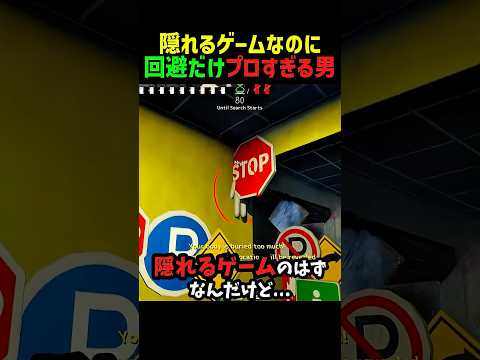
Now the room you haven't seen. Japanese comment sections are quiet by your standards. Short lines, no caps, barely an emoji in sight. When Meccha Chameleon blew up worldwide, one clip showed a player who refused to hide and just danced circles around the seeker instead. The top Japanese comment on it was twelve characters long.
“The entire point of the game has changed lol”
The last character is 草, kusa. It means grass. Japanese net slang writes laughter as w, short for warau, and a row of them looks like blades of grass growing across the screen. So wwww became grass, and grass became one character that carries everything lol carries while somehow landing drier. The other habit you'd notice in our room is taxonomy. Under that same video, someone announced that after the chameleon faction and the hide-and-seek faction, a new dodge faction had officially been founded. We like our chaos filed and labeled. Part of this is heritage. A lot of our room grew up on Niconico, where comments fly across the video itself, so the reflex is to drop one line in the moment rather than compose a paragraph afterward. Reading a Japanese comment section feels less like reading and more like overhearing.
Same Game, Two Kinds of Angry
The clearest split I've ever watched came from that same game. In the Japanese room, even the rule-breaker got adopted as a running gag. In your room, a streamer got accused of using an AI drawing tool to cheat, and the comment that took the top spot with seventy-seven thousand likes went like this.
“Cheating in a hide and seek game has GOT to be the most untouched grass, non shower thing I have seen TO DATE.”
A full roast, built with care, aimed at the emptiness of cheating in a hide-and-seek game that has no prize money and no ranking. Reading it from Japan, I was strangely impressed. Our room would have closed the entire incident in five characters, something like cheating, grass. Your side laughs differently, and it turns out it gets angry differently too, at essay length, with structure. I translated that comment for our Japanese-facing page and lost about twenty percent of the heat on the way over. Some things only work at the original volume.
You Scream in Caps. We Leave a Small (泣) at the End.
Grief is where the two rooms really part ways. English mourns at full volume. Caps lock, a wall of crying emoji, the R.I.P. format. Under the official Infinity Castle trailer for Demon Slayer, a comment paying respects to all the fans who never lived to see that day collected eighty-seven thousand likes. A funeral that is also a festival. Nobody throws an emotional party like your room does.
Japanese grief shrinks instead. The bigger the feeling, the fewer the characters. Under a Honkai Star Rail video about Castorice, the girl whose touch brings death to anyone she reaches for, one comment was seven characters that translate to stop, this is killing me. Another laughed at the final shot and then placed a tiny (泣) at the end, a single crying character in parentheses, the quietest possible way to admit you lost. Neither room feels things harder than the other. One culture amplifies. The other subtracts. My whole job is adjusting the volume knob between them.
Two Rooms, One Show
After enough nights of commuting between the two rooms, what stays with me is how identical the foundation is. The comedy contest and the kusa, the R.I.P. festival and the small (泣). Same amount of love, different exits. The lung scream at the top of this page exists because a comparison video of a chain-smoking cat and Baki's Yujiro Hanma somehow passed six million views. No cultural theory explains that one. Fandom does.
This site runs the errand in both directions. The Japanese-language side carries your comments home to Japan, and the English side, the one you're reading now, carries ours to you. Somewhere in the middle there's me, walking between two rooms every night with a stack of other people's jokes. Next time you read one of our digests, try to taste the air of the room it came from. The words are translated. The temperature, I hope, is not.
More from Japan
- #めっちゃカメレオン
 6,383 likesGamesYouTube
A Meccha Chameleon Player Dodges Instead of Hiding — and Japan Can't Stop Laughing
Meccha Chameleon is the hide-and-seek party game out of Japan that just exploded worldwide: hiders disguise as objects while a seeker hunts them. But in this clip — shared by Japanese creator Sekai Ojisan — the hider does the exact opposite of hiding: he juke-dances around the 'stop man' seeker with pinpoint emote-cancels, and Japanese fans lost it. The most-liked comment simply declares that the entire point of the game has changed. From there the thread crowns a whole new archetype ('there are chameleon players, hide-and-seek players… and now: the dodge faction'), marvels at how the player shrinks his hitbox with emotes ('so crafty'), and notes that Chinese players in particular tend to run circles rather than hide. It's the affectionate, in-the-know laughter of a fanbase watching someone break their favorite game in the funniest possible way — right down to the exasperated question every player ends up asking about who gave the chameleon dodge skills in the first place.
817 comments - #Honkai: Star Rail
 8,631 likesGamesYouTube
Honkai: Star Rail: Castorice's Tragic Past Retold — Her Touch Always Brings Death
On Honkai: Star Rail, Japanese fans watched a short retelling of Castorice's tragic past — her touch always brings death, so she can never get close to anyone — and coped the only way they know how: by joking through the tears. The thread splits between genuine heartbreak ("Onpolos is bad for your heart and tear ducts") and pure gallows humor, with the "stay away from me!! (out of kindness)" reframe and a horrified "I wonder how many it killed" becoming instant memes. The kicker is the deer at the end, which fans swear is staring straight into the camera.
259 comments - #ヤニねこ
 5,815 likesAnimeYouTube
Chainsmoker Cat (Yani Neko): The Landlord Catches Her Smoking — and Lets Her Off
The official Chainsmoker Cat (Yani Neko) clip has the landlord catch his tenant behind on rent and smoking where she shouldn't — and he lets her off with nothing more than pulling weeds. Across 650 comments, the top comment (5,815 likes) marvels that this is all it took after she desperately offered to do "whatever it takes." From there the section becomes a small celebration of the landlord himself: fans call him a near-perfect gentleman aside from one confessed weakness, joke that he's basically become the show's real father figure, and note he even offers his delinquent tenant tea and snacks afterward. Several say the character subverted their expectations going into the show, and one commenter with cat-owning experience points out how accurately the character's unrepentant "yes nya~" captures real feline behavior. It closes on a small reveal: what everyone assumed was a cup of tea turns out, on closer look, to be a can of cola cracking open.
650 comments - #ヤニねこ
 3,424 likesAnimeYouTube
Chainsmoker Cat (Yani Neko): Makoto Shinkai Called It "Wonderful" — Japan Reacts
Director Makoto Shinkai publicly called Chainsmoker Cat (Yani Neko) "wonderful," briefly sending the show trending. A YouTube reaction-compilation clip about it pulled 494 comments, and the top comment sits at 3,424 likes, referencing that exact trend. The discussion split between shock that the show's most chain-smoking, off-the-rails character is modeled on a real friend of the author (a claim that drew 1,423 and 861 likes in separate comments), and open admiration for how directly the anime depicts drug and smoking content despite modern broadcast standards — one comment at 389 likes favorably compared it to a 20-year-old manga that only implied similar material. It closes on a joke so on-the-nose it doubles as a genre observation about how many chain-smoking protagonists this single season somehow has.
494 comments